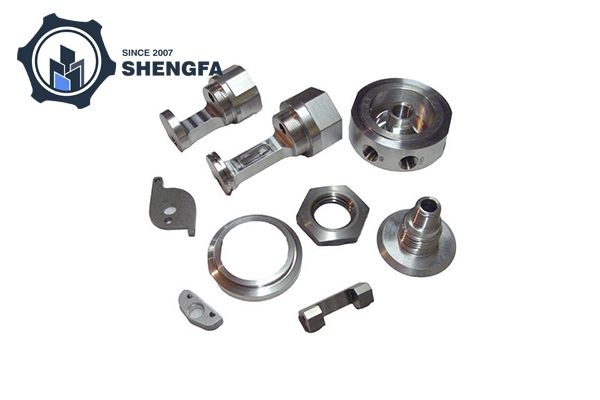


SHENGFA Stainless Steel CNC Machining Parts/Spare Parts are designed for industrial assemblies requiring threaded connections, precision mounting holes, and accurately machined mating surfaces.
The threaded flange adapter combines a bolted mounting interface with a central threaded connection. CNC turning, drilling, countersinking, and internal threading form the main machining sequence.
| Parameter | Specification |
|---|---|
| Part type | CNC-machined threaded flange adapter |
| Primary material | Stainless steel |
| Alternative materials | Carbon steel, aluminum alloy |
| Main structure | Circular flange with raised central boss |
| Mounting features | Six countersunk through-holes |
| Central connection | Internal thread with locating shoulder |
| Machining operations | CNC turning, drilling, countersinking, internal threading |
| Surface condition | As-machined metallic finish |
| Dimensions and tolerances | According to engineering drawing |
| Thread specifications | Designated diameter, pitch, and tolerance |
| Manufacturing service | OEM and ODM machining |
Flange dimensions, hole positions, thread tolerances, flatness, and surface roughness are defined by the component drawing.
Material selection for Stainless Steel CNC Machining Parts/Spare Parts depends on corrosion exposure, mechanical loading, weight requirements, and machining specifications.
| Material | Characteristics | Typical Applications |
|---|---|---|
| SUS304 stainless steel | General corrosion resistance, good formability, and broad industrial use | Industrial fittings, threaded connectors, and mounting components |
| SUS316L stainless steel | Improved resistance to many chloride-containing environments compared with SUS304 | Components exposed to more demanding corrosive conditions |
| Carbon steel | Available in different grades and strength levels; corrosion protection may be required | Mechanical assemblies with defined strength and cost requirements |
| Aluminum alloy | Lower density than steel and good machinability | Lightweight components where strength and thread-wear requirements permit |
SUS304 is suitable for many general industrial applications, while SUS316L may be selected for environments involving greater chloride exposure. Carbon steel and aluminum alloy provide alternatives when mechanical properties, weight, or cost take priority over stainless steel's corrosion resistance.
The six countersunk through-holes provide the flange's bolted mounting interface. Hole diameter, countersink angle, pitch-circle diameter, and positional tolerances follow the mating assembly drawing. Accurate hole placement supports alignment with the corresponding mounting points.
The raised boss houses the main internal thread. Thread diameter, pitch, depth, and tolerance determine compatibility with the mating component. The locating shoulder provides a seating reference where required by the assembly design.
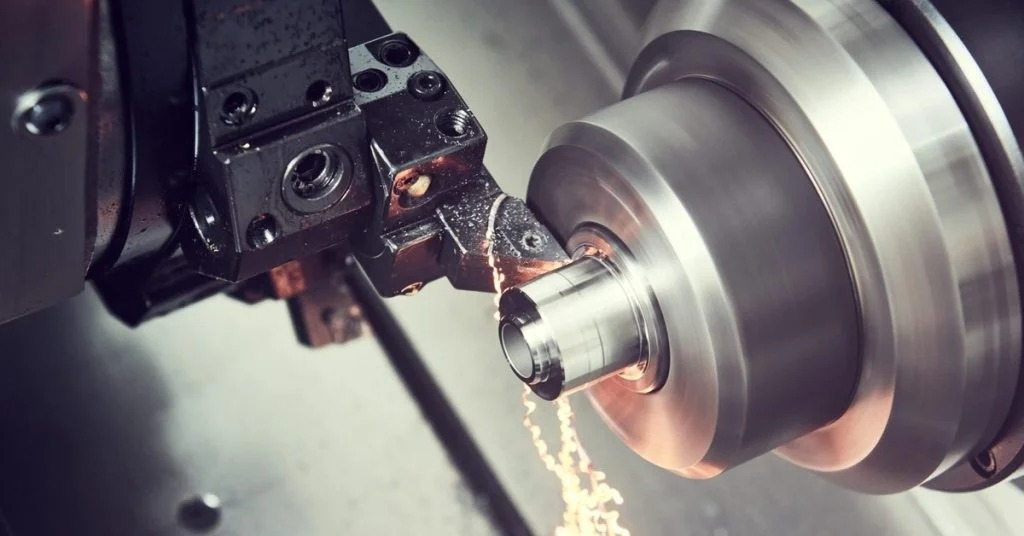
CNC turning forms the flange's circular profile and end-face geometry. The specified outer diameter, concentricity, flatness, and surface roughness determine the dimensional accuracy of the finished part. Functional mating surfaces can receive additional finishing when required by the drawing.
For Stainless Steel CNC Machining Parts/Spare Parts, material selection must account for the operating environment and fastening conditions.
SUS304 covers many general industrial connections. SUS316L is an option for applications with greater exposure to chloride-containing media. Carbon steel may suit assemblies requiring specific mechanical properties, while aluminum alloy can reduce component weight.
Thread engagement, fastening loads, contact-surface wear, and galling risk also affect material selection. For stainless steel threaded assemblies, compatible fasteners and appropriate assembly practices help reduce thread damage during installation.
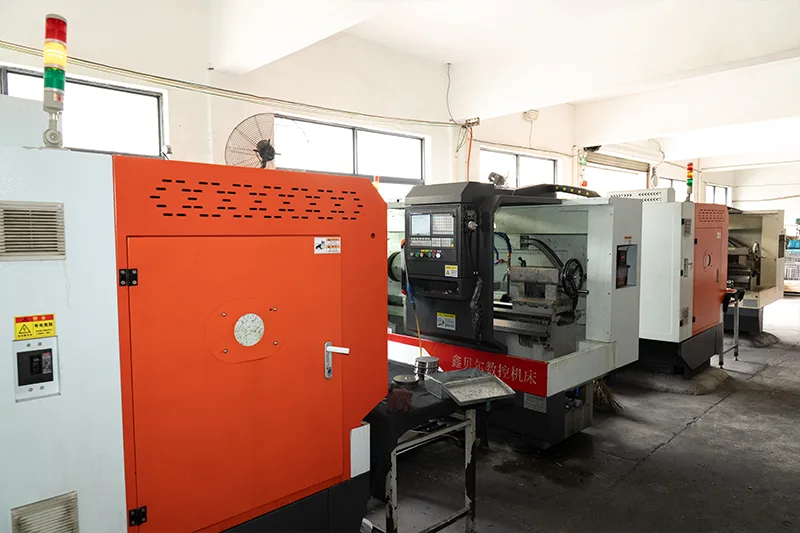
SHENGFA's machining process for stainless steel flange adapters covers turning, drilling, countersinking, internal threading, and edge finishing.
Cutting parameters and tool geometry are selected according to the stainless steel grade and feature dimensions. Maintaining effective cutting conditions helps limit work hardening, while chip evacuation and coolant management support stable machining.
Internal threads require control of diameter, pitch, depth, and fit. The six mounting holes must meet the specified positional and countersink requirements. Deburring removes unwanted edges around holes, countersinks, and threaded openings without altering functional dimensions.
The reference component has an as-machined metallic finish with visible turning marks. Additional finishing can be specified according to corrosion-control and surface-quality requirements.
| Finish | Application |
|---|---|
| As-machined | Retains the turned surface and visible machining marks |
| Passivation | Supports stainless steel corrosion resistance by removing certain surface contaminants and promoting the protective passive layer |
| Mechanical polishing | Produces a smoother surface where specified |
| Other specified treatments | Applied according to material compatibility and drawing requirements |
Passivation is a surface treatment rather than a substitute for selecting the appropriate stainless steel grade. The finishing specification should identify the required process and acceptance criteria.
Established in 2007, SHENGFA Hardware provides CNC machining and metal-processing services for stainless steel, carbon steel, and aluminum alloy components. Production can start from CAD files, dimensioned drawings, or component specifications, with machining operations selected to match the part geometry.
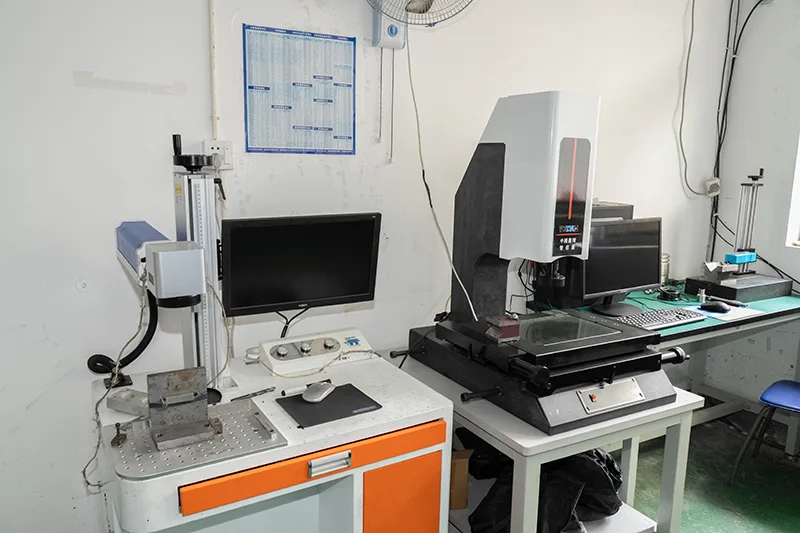
For threaded flange adapters, the machining sequence covers flange turning, mounting-hole drilling and countersinking, internal threading, and edge finishing. Flange dimensions, hole positions, thread fit, locating shoulder geometry, and surface roughness form the main inspection points. SHENGFA's listed inspection equipment includes coordinate measuring machines (CMMs), 2D optical projectors, and surface roughness testers. X-ray inspection equipment is also available for applications requiring internal-structure examination.
SHENGFA's OEM and ODM services accommodate drawing-based component production, including specified materials, thread standards, dimensional tolerances, and surface treatments. Production planning also considers order quantity and inspection documentation, linking the machining sequence to the finished component's functional requirements.
For Stainless Steel CNC Machining Parts/Spare Parts, this combination of machining processes, dimensional inspection equipment, and drawing-based production supports the manufacture of components with defined mounting interfaces, threaded connections, and mating surfaces. To request a quotation, provide the part drawing, material grade, thread specifications, critical tolerances, surface finish, and order quantity.
Submit the component drawing, material grade, thread specifications, dimensional tolerances, surface finish, and order quantity to SHENGFA Hardware for a quotation.
SHENGFA provides CNC-machined stainless steel components for threaded connections, mounting assemblies, and other industrial applications, with carbon steel and aluminum alloy available for projects requiring alternative material properties.
Send InquiryUse compatible fastener materials, apply an anti-seize lubricant suitable for stainless steel, and control assembly speed and torque. Avoid reusing threads that show signs of galling or deformation.
Specify the thread standard, nominal diameter, pitch, tolerance class, and inspection method on the drawing. The mating component's thread specification should be confirmed before production to avoid fit issues.
Passivation removes surface contaminants without intentionally removing base material, so it should not change functional dimensions. Critical dimensions and thread fit should still be verified after finishing if the drawing requires it.
The countersink angle must match the screw head angle to ensure proper seating and load distribution. An incorrect angle can reduce contact area and cause loosening or surface damage under vibration.
Yes. SHENGFA accepts OEM and ODM machining from dimensioned drawings or CAD files. Prototype and small-batch quantities can be quoted based on material, tolerances, inspection requirements, and finishing specifications.
Address
Yunlong Town, Ningbo City,Zhejiang Province, China
Tel