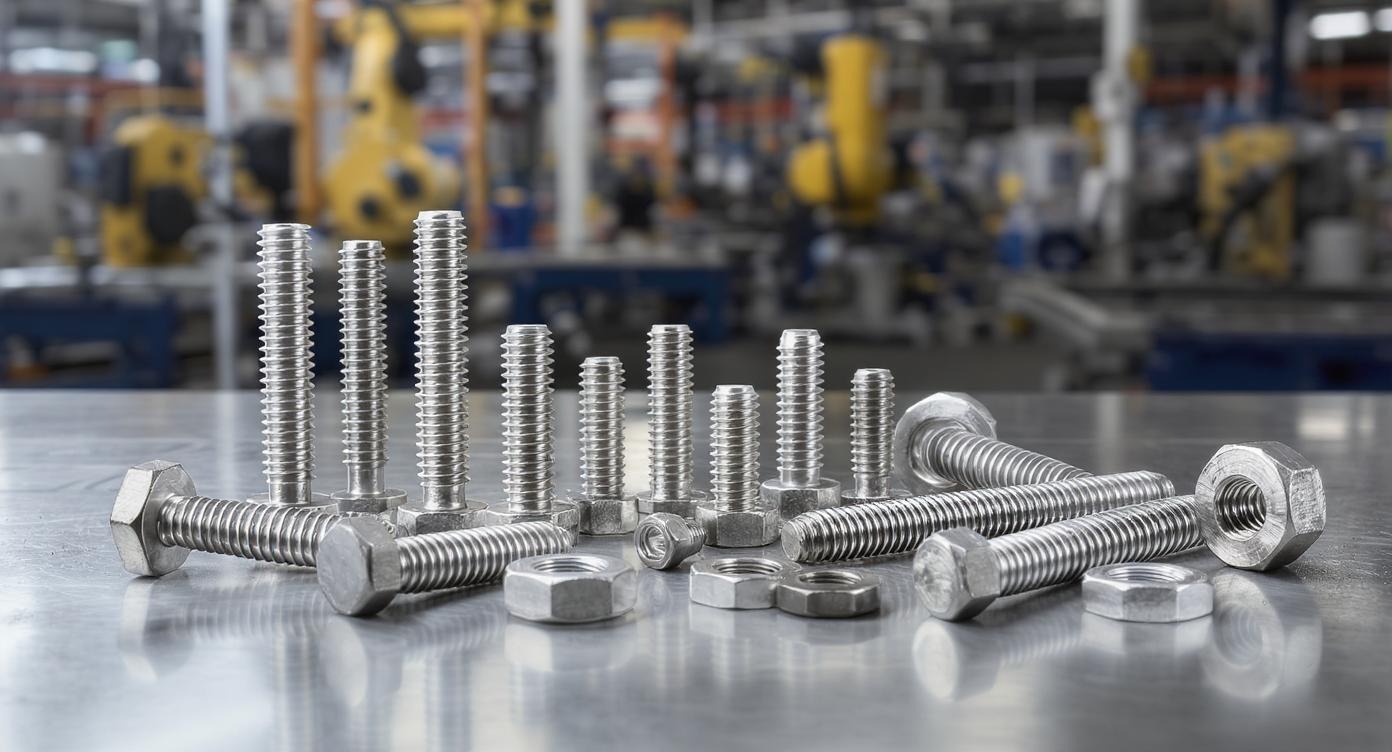
If you take a finished bolt in your hand, it does not really look complicated. The surface is smooth, the thread is clean, the dimensions are exactly what they should be, and everything feels… normal. That word is actually the problem. When something looks normal, people assume it was easy to make, or at least predictable. In hardware manufacturing, that assumption is almost never true.
What you see at the end is only a very small part of the story. Most of the work is already “gone” by that point. It happened earlier, during material preparation, during forging, during machining, and even during moments that are not officially recorded anywhere. These are the parts that do not show up in inspection reports, but they are exactly where stability is decided.
At Ningbo Shengfa Hardware, we did not really understand this in the beginning. Like many factories, we focused more on the visible stages—final inspection, surface treatment, packaging. Over time, especially after dealing with export orders where consistency matters more than anything else, it became clear that the real difference is made much earlier, in places that customers will never directly see.
On paper, materials are very simple. A certain grade of steel has a defined composition, an aluminum alloy has its own standard, and everything should behave accordingly. But in actual production, the situation is always a bit different. Two batches that look identical in documentation can react differently once they enter forging or CNC machining.
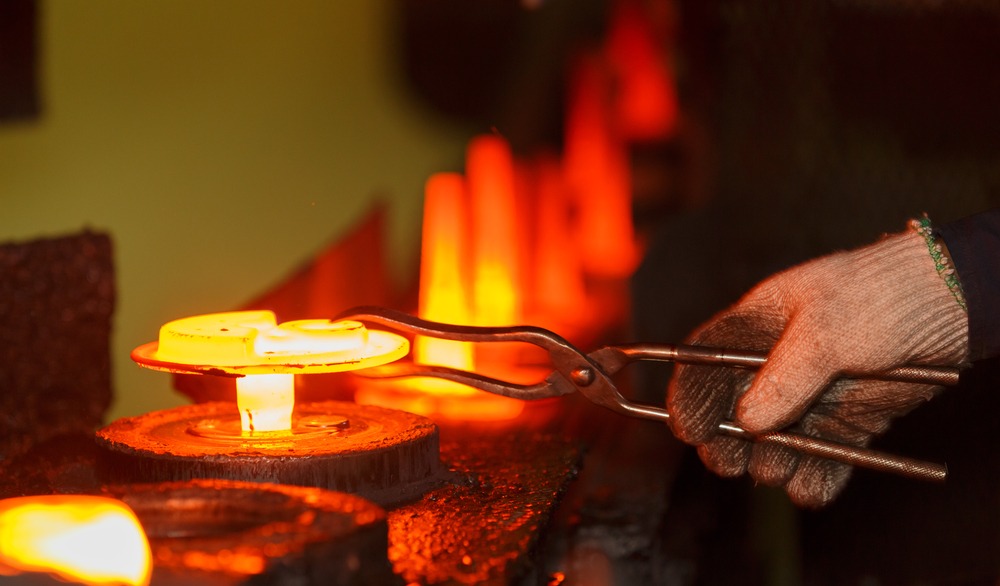
Sometimes the difference is small, almost unnoticeable at first. A slight change in hardness, a different response to heat, or even a subtle variation in how the material flows inside a die. During forging, if the temperature is just slightly off, the material may not fill the mold evenly. Nothing dramatic happens, no immediate defect, but internal stress might already be there. That stress will not show itself right away. It may only become visible later, when thread accuracy becomes harder to control or when surface treatment does not behave as expected.
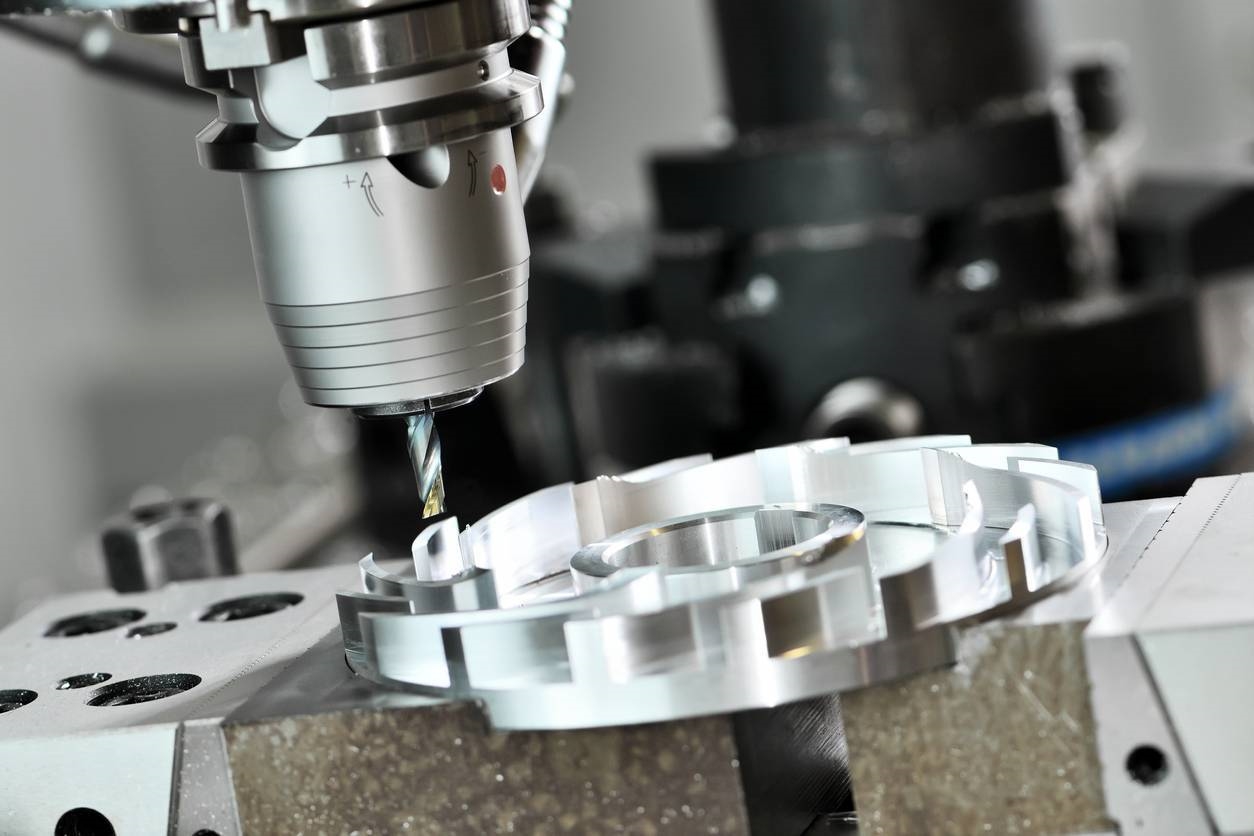
Aluminum parts are even more sensitive in this sense. Compared to steel, they react faster to cutting forces and temperature changes. In CNC machining, this means parameters cannot just be copied from one batch to another. Small adjustments are always needed, and the timing of those adjustments matters.
At Ningbo Shengfa Hardware, operators do not rely only on fixed parameters. They also pay attention to things that are difficult to describe in a manual, like the sound of cutting, the way chips form, or how the tool feels during contact. These are not dramatic changes, but over time, they help reduce variation before it becomes a real problem.
There is a common idea that quality comes from inspection. In reality, inspection mostly tells you what has already gone wrong. It is useful, but it is not where reliability starts.
In processes like forging, casting, or investment casting, every step is connected. If the forged blank is slightly inconsistent, CNC machining has to compensate. If machining starts compensating too much, the thread rolling stage will have less room to stay stable. What looks like a small issue at the beginning slowly grows into something more difficult to control.
We learned this the hard way. There was a period when we kept adjusting parameters at different stages, trying to “fix” problems as they appeared. It worked sometimes, but not consistently. In fact, frequent adjustments often introduced new variables, and the overall result became less predictable.
The approach at Ningbo Shengfa Hardware gradually changed. Instead of reacting to problems, we started focusing on making each step more stable on its own. Heating cycles in forging became more consistent, tooling wear in CNC machining was monitored more carefully, and process changes were reduced rather than increased. It may sound counterintuitive, but fewer adjustments often lead to better results, simply because there are fewer new variables entering the system.
Over time, this way of working made production feel less “busy,” but more controlled. And most importantly, repeat orders became easier to handle, because the process itself was no longer changing all the time.
By the time a fastener reaches its final stage, most of the important factors are already determined. Surface treatment and final inspection are still necessary, but they do not create quality from nothing. They only reveal what has already been built into the part.
Thread accuracy is a good example. On paper, it is just a dimensional requirement. In practice, it affects how smoothly parts assemble and how evenly load is distributed during use. If earlier machining introduces even a slight misalignment, thread rolling cannot completely fix it. The part may still pass inspection, but during assembly, the difference can be felt.
Surface treatment works in a similar way. Whether it is zinc plating or another type of coating, the final result depends heavily on how clean and uniform the surface was before treatment. If earlier processes leave small irregularities, the coating may not adhere evenly. This is not always visible immediately, but over time, it can affect corrosion resistance.
At Ningbo Shengfa Hardware, we tend to look at the final product as a kind of “evidence.” If the coating looks even and the threads feel smooth during assembly, it usually means the earlier processes were controlled properly. If something feels slightly off, the cause is almost never in the final step. It is usually somewhere earlier, hidden in a place that seemed unimportant at the time.
Manufacturing does not really become simple, even after many years. There are still variables, still unexpected situations, and still moments where things do not go exactly as planned. What changes with experience is not the number of variables, but how often they turn into surprises.
At the beginning, many issues feel unpredictable. Later, similar situations start to look familiar. You recognize patterns, even if you cannot fully explain them in technical terms. A certain type of variation in forging, a certain response in machining, a certain behavior during surface treatment—these things repeat themselves, just not always in the same way.
This accumulated experience is not something that can be written into a single document. It builds slowly, through repeated production, through small mistakes, and through gradual adjustments. At Ningbo Shengfa Hardware, this is probably one of the most valuable parts of long-term manufacturing. It does not eliminate problems, but it makes them easier to anticipate and control.