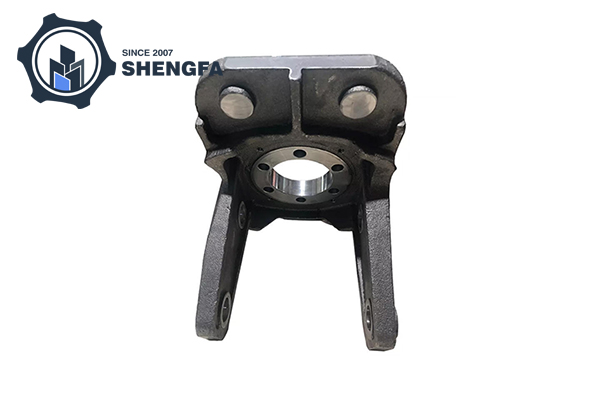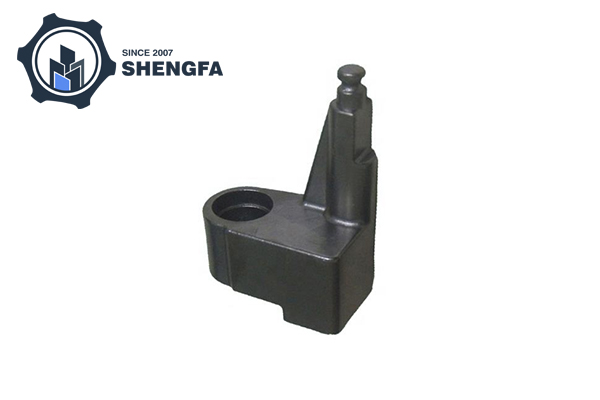
Complex metal components often create a basic manufacturing problem: the more complicated the geometry becomes, the harder it is to produce it accurately without adding multiple machining or assembly steps. Stainless Steel Investment Casting Parts offers a practical way to form shapes that would be difficult, or sometimes uneconomical, to produce from solid material.
But this does not mean every complex shape can be cast successfully. Thin walls, narrow passages, sharp transitions, deep cavities, and small openings all place different demands on the casting process. The real question is not simply whether stainless steel investment casting can produce intricate geometries, but how far the process can go while maintaining sound metal flow, dimensional control, and usable surface quality.
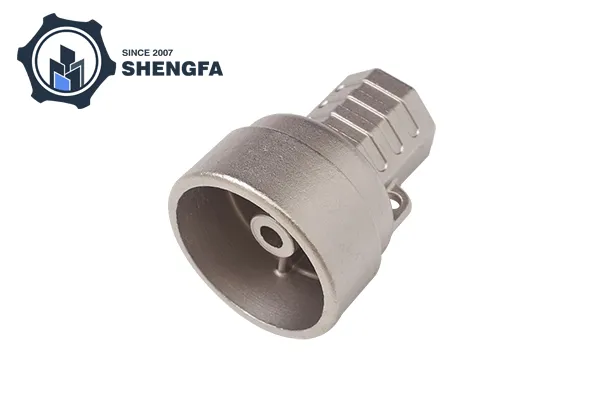
Investment casting begins with a detailed wax or polymer pattern. A ceramic shell is built around the pattern, after which the pattern is removed and molten stainless steel is poured into the resulting cavity.
Because the mold is created around the actual geometry of the component, the process does not depend entirely on cutting tools reaching every surface. This is one of its main advantages for complicated parts.
Features that can often be incorporated into one casting include:
For a machined component, producing these features may require several setups, specialized tools, or separate components joined afterward. Investment casting can reduce the number of individual manufacturing operations by forming more of the geometry directly in the mold.
Thin walls are possible, but they are among the more sensitive features in an investment casting process.
When molten Stainless Steel Investment Casting Parts enters a thin section, the metal loses heat rapidly because the surrounding mold absorbs heat. If the metal solidifies before the cavity is completely filled, defects such as misruns or incomplete sections can occur.
Several variables affect whether a thin wall can be filled successfully:
| Factor | Effect on Thin Sections |
|---|---|
| Wall thickness | Determines how quickly the metal loses heat |
| Pouring temperature | Influences metal fluidity |
| Alloy composition | Different grades behave differently during filling |
| Shell temperature | Affects solidification speed |
| Gating design | Controls how molten metal reaches thin areas |
| Part geometry | Sharp transitions can interrupt metal flow |
| Casting size | Larger parts may require different filling strategies |
This is why there is no single universal minimum wall thickness that applies to every stainless steel investment casting. The practical limit depends on the alloy, component dimensions, shell system, casting temperature, and overall geometry.
A common mistake is to evaluate a component only by its thinnest wall. In practice, the entire geometry determines how easily molten metal can reach that wall.
For example, a short thin rib connected to a relatively thick section may be easier to fill than a long, isolated thin wall. Similarly, a thin curved surface may behave differently from a thin flat section.
Designers should therefore consider:
The longer a thin wall is, the greater the risk of premature solidification before the cavity is fully filled.
Thin sections connected to larger masses can experience differences in cooling and solidification. Proper transitions can help reduce localized stress and casting defects.
Sharp internal corners can complicate metal flow and create stress concentration. Small radii are generally easier to manage than abrupt 90-degree transitions.
Internal channels must allow molten metal to enter and air or gases to escape. Extremely narrow or deep passages can become more difficult to reproduce consistently.
Investment casting is often associated with complicated shapes, but there are practical boundaries.
A design may become difficult when it combines several extreme features at once—for example, a very thin wall, a long narrow cavity, a deep internal passage, and a small opening.
At that point, the question changes from “Can it be cast?” to “Can it be cast consistently?”
This distinction is important for production planning. A geometry that can be produced once under carefully controlled conditions may not be suitable for stable repeated production if the process window is too narrow.
Stainless steel includes many different alloy families, including austenitic, martensitic, ferritic, and precipitation-hardening grades. Their casting behavior is not identical.
The selected grade can influence:
For this reason, material selection should happen together with casting design rather than after the geometry has already been finalized.
A stainless steel grade selected primarily for corrosion resistance, for example, may require different process considerations from a grade selected for higher hardness or mechanical strength.
The process becomes particularly useful when several complex features need to be incorporated into one metal component.
Consider a stainless steel housing containing curved passages, mounting bosses, thin ribs, and an irregular external profile. Machining the entire shape from a solid block could generate substantial material waste and require multiple machining orientations.
Investment casting can form much of the basic geometry first. Machining can then be reserved for surfaces where tighter tolerances, threads, sealing areas, or precise holes are required.
This combination is often more practical than expecting either casting or machining to perform every operation.
Investment casting can achieve relatively detailed surfaces, but not every feature should necessarily be left in the as-cast condition.
Typical post-casting machining areas include:
The key is to distinguish between shape complexity and dimensional precision.
Investment casting is well suited to forming complex shapes. CNC machining remains more appropriate when a surface requires particularly tight dimensional tolerances or a controlled surface finish.
A small modification to the CAD model can sometimes make a significant difference to casting behavior.
Useful design considerations include:
Sudden changes from thin to thick sections can create uneven cooling. Gradual transitions can provide a more predictable solidification pattern.
Adding suitable radii can improve metal flow and reduce localized stress concentrations.
Large differences in section thickness can produce different cooling rates and increase the possibility of shrinkage-related problems.
Although investment casting does not require the same mold-release draft considerations as conventional die casting, the overall pattern and shell design still need to accommodate manufacturing and pattern removal requirements.
Surfaces requiring post-casting machining should be identified during design rather than added as an afterthought.
External geometry is generally easier to inspect than internal geometry. Once a component contains internal passages or enclosed cavities, verification becomes more important.
Depending on the part, inspection may involve:
X-ray inspection is particularly useful when internal defects cannot be identified from the outside. It can reveal certain forms of porosity, shrinkage, or inclusions without cutting the component apart.
Investment casting tends to make sense when a component combines complex geometry, relatively small or medium dimensions, difficult-to-machine features, and a need to reduce the number of assembled pieces.
It may be less attractive when:
The best process therefore depends on the entire component rather than one attractive feature.
Before selecting stainless steel investment casting, several questions should be answered:
Answering these questions early can reveal potential casting problems before tooling and production begin.
Stainless steel investment casting can handle intricate geometries and thin-wall features, but its capability is not unlimited. Successful results depend on the relationship between wall thickness, geometry, alloy selection, metal temperature, shell conditions, gating design, and solidification behavior.
The strongest application is not simply a part with a complicated shape. It is a component where complex geometry can be formed efficiently through casting while precision-critical areas are finished through machining and verified through appropriate inspection.
For Stainless Steel Investment Casting Parts, the most useful approach is therefore to evaluate the complete geometry rather than focus on a single minimum wall-thickness figure. A well-designed casting works with the behavior of molten stainless steel instead of forcing the process to reproduce features that are fundamentally difficult to fill or solidify consistently.
-