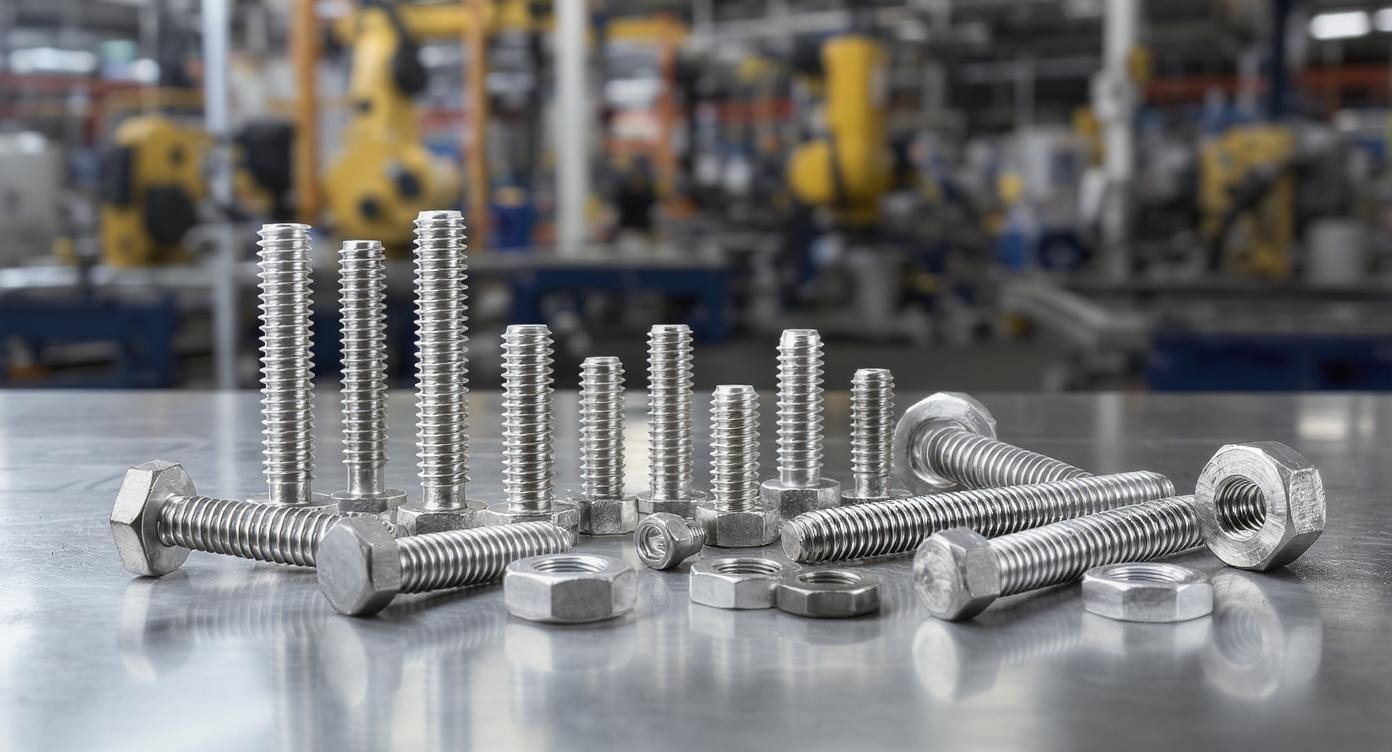

Thread rolling is an important manufacturing process that improves the dimensional consistency, surface finish, and fatigue performance of a Hex Head Screw. By forming threads through controlled plastic deformation rather than cutting away material, manufacturers can preserve more continuous metal grain flow and introduce beneficial compressive residual stresses at the thread roots. At SHENGFA, we consider material selection, thread geometry, cold heading, and heat treatment together to produce reliable fasteners for automotive, construction, agricultural machinery, and industrial equipment applications.
When we evaluate the performance of a Hex Head Screw, we pay close attention to the thread manufacturing process. The threads are not simply a connection feature. They directly affect how the fastener engages with a nut or tapped hole, distributes clamping force, and responds to repeated mechanical loading.
Thread rolling is a cold-forming process that creates external threads by pressing a cylindrical metal blank between hardened dies. Instead of removing material through cutting, the dies apply controlled pressure and force the steel to flow into the required thread profile. This process forms the thread crests, roots, and flanks without producing conventional machining chips.
For carbon steel and alloy steel fasteners, the material must have suitable ductility to withstand this deformation. The initial blank diameter, die geometry, rolling pressure, lubrication, and alignment all influence the final thread dimensions.
At SHENGFA, we view thread rolling as part of the complete fastener manufacturing workflow. Our experience in precision metal manufacturing, including forging and CNC machining, helps us understand how upstream material and forming conditions influence the finished component.
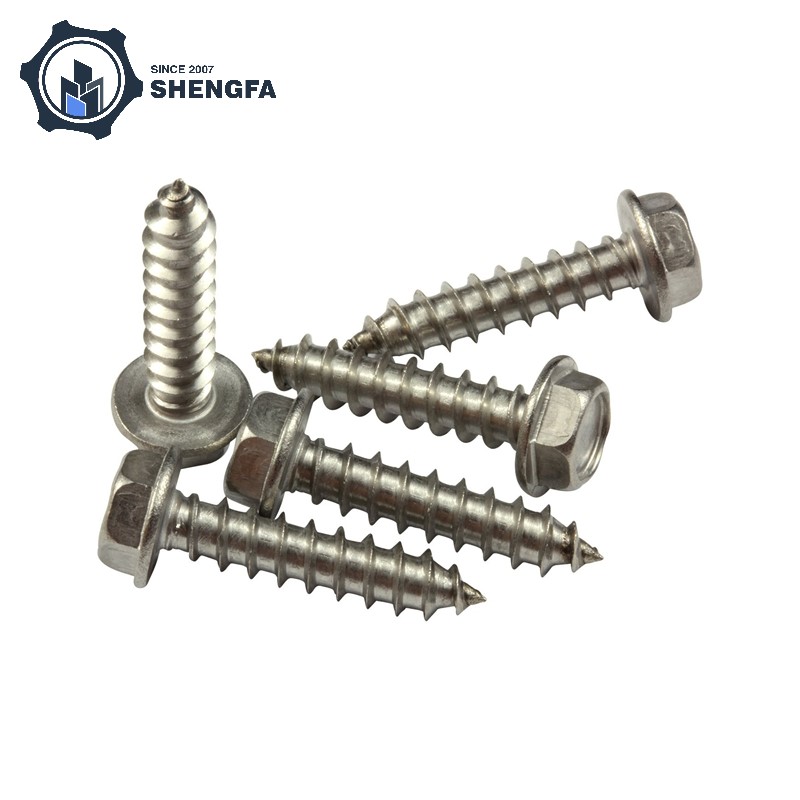
One of the main advantages of thread rolling is its effect on the metal structure. During thread cutting, a cutting tool removes material to create the thread profile, interrupting the original grain flow at the machined surface. During rolling, the material is displaced and reshaped under pressure.
This allows the metal grain flow to follow the formed thread contour more continuously. At the thread roots, where stress concentrations can develop under tensile and cyclic loading, this structural difference can be particularly important.
For a Hex Head Screw used in automotive assemblies or heavy machinery, preserving favorable grain flow helps support more dependable mechanical performance. However, the actual strength still depends on steel composition, heat treatment, thread geometry, and manufacturing quality.
Fasteners used in engines, agricultural machinery, pumps, and industrial equipment rarely experience only static loads. Vibration, alternating tension, and repeated tightening forces can gradually cause fatigue damage.
Thread rolling can improve fatigue resistance through two related mechanisms. First, cold deformation causes local work hardening around the thread profile. Second, the process can introduce compressive residual stresses near the thread roots. These stresses help counteract tensile stresses that would otherwise encourage fatigue crack initiation.
In our experience, this advantage is particularly relevant when a threaded connection operates under repeated loading. Nevertheless, thread rolling alone cannot eliminate fatigue failure. Correct preload, suitable thread engagement, installation torque, and joint design remain equally important.
Thread surface quality influences how a screw engages with its mating component. Rough machining marks, dimensional variation, or an inconsistent thread profile can increase friction and make assembly less predictable.
With properly controlled rolling dies, the process produces a smooth thread surface and repeatable geometry. Important dimensions include major diameter, minor diameter, pitch diameter, thread pitch, and flank angle.
For metric Hex Head Screws, common coarse thread specifications include M6 × 1.0, M8 × 1.25, M10 × 1.5, and M12 × 1.75. These are standard thread examples rather than a limitation on available product sizes. The required tolerance class and mating thread specification should always be confirmed against the application drawing or applicable standard.
Thread stripping occurs when the engaged threads deform or shear under excessive loading. Thread rolling can improve the local surface condition and work-harden the material, supporting better resistance to thread deformation in suitable material and design conditions.
However, stripping strength is not determined by the manufacturing method alone. Material grade, engagement length, nut or tapped-hole strength, thread dimensions, and applied load all affect the result. We therefore consider the complete threaded joint rather than evaluating the screw in isolation.
Both thread rolling and thread cutting can produce functional external threads, but they work differently and offer different manufacturing advantages. For production runs involving conventional steel fasteners, rolling is often preferred because of its material utilization, production efficiency, and potential mechanical benefits.
| Comparison Factor | Thread Rolling | Thread Cutting |
|---|---|---|
| Manufacturing Principle | Forms threads through plastic deformation | Removes material using a cutting tool |
| Material Removal | No conventional cutting chips | Produces chips during machining |
| Grain Flow | Can follow the formed thread profile | Interrupts the original grain flow |
| Surface Finish | Generally smooth and consistent | Depends on cutting conditions and tooling |
| Fatigue Performance | Can benefit from work hardening and compressive residual stresses | More sensitive to surface marks and machining conditions |
| Production Efficiency | Well suited to repeatable, high-volume production | Useful for small batches and specialized geometries |
| Tooling Requirements | Requires precision rolling dies | Uses cutting dies, taps, or machining tools |
For standard industrial fasteners, we generally consider thread rolling a practical choice when the material, dimensions, and production volume are suitable. Thread cutting still has a place in small-batch production, large-diameter components, and special thread configurations where rolling may not be practical.
A high-quality Hex Head Screw does not come from thread rolling alone. Its performance is determined by several connected manufacturing stages. At SHENGFA, we focus on the relationship between material properties, forming accuracy, and the final application requirements.
We consider the required strength, working environment, and corrosion exposure before selecting the steel grade. Carbon steel is commonly used for general mechanical and structural fastening, while alloy steel is suitable for applications requiring higher mechanical strength after appropriate heat treatment. Stainless steel is a practical option for environments where corrosion resistance is a priority.
Before thread rolling, the screw blank must have an accurately formed head and shank. Cold heading uses compressive force to shape the metal into the required head geometry. This process is widely used in fastener production because it supports repeatable dimensions and efficient material utilization.
For hexagonal head components, we pay attention to across-flats dimensions, head height, bearing surface condition, and the transition between the head and shank. These features affect wrench engagement, installation stability, and load transfer through the joint.
Heat treatment is selected according to the material grade and required mechanical properties. Quenching and tempering can increase strength and hardness in suitable carbon and alloy steels, while the specific thermal cycle must be matched to the fastener specification.
We also consider surface finishing according to the working environment. Zinc plating provides general corrosion protection, while hot-dip galvanizing is commonly considered for structural fasteners exposed to outdoor conditions. Black oxide offers a darker industrial finish with limited corrosion protection and normally requires additional protection in demanding environments. Stainless steel relies primarily on its alloy composition for corrosion resistance.
One detail worth emphasizing is process sequence. Rolling threads before or after final heat treatment can produce different residual stress and fatigue characteristics. For demanding fatigue applications, the specified manufacturing sequence should be reviewed against the relevant fastener standard rather than assuming one sequence suits every screw.
The combination of secure wrench-driven installation, reliable thread engagement, and suitable mechanical strength makes the Hex Head Screw useful across many industrial sectors. Thread rolling is particularly valuable where consistent thread quality and repeated loading are important.
Automotive fasteners are exposed to vibration, temperature changes, and repeated mechanical stress. Thread-rolled screws can be used in suitable engine accessories, chassis assemblies, brackets, and equipment mounting connections. The required strength grade, coating, and thread specification must match the component's design requirements.
Tractors, harvesting equipment, pumps, and industrial machinery often operate in environments involving dust, moisture, vibration, and variable loads. Selecting the correct steel grade and surface finish helps maintain fastening reliability during service.
Hexagonal head fasteners are widely used in steel structures, equipment foundations, support frames, and mechanical installations. For structural connections, the specified bolt or screw standard, strength class, dimensions, and coating requirements must be verified before production.
Marine systems and industrial installations can expose fasteners to humid or corrosive environments. Stainless steel grades or suitable protective coatings may be selected according to the actual exposure conditions. In these applications, material compatibility and the risk of galvanic corrosion should also be considered.
To make the main manufacturing considerations easier to compare, we have summarized the relationship between thread rolling and the performance characteristics of a Hex Head Screw below.
| Manufacturing Factor | Performance Benefit | Typical Application Concern |
|---|---|---|
| Cold Thread Rolling | Work hardening and improved thread consistency | Repeated mechanical loading |
| Continuous Grain Flow | Supports fatigue performance at the thread profile | Vibration and cyclic stress |
| Precision Die Control | Consistent pitch and thread dimensions | Nut and tapped-hole compatibility |
| Quenching and Tempering | Adjusts hardness and mechanical strength | High-strength fastening requirements |
| Protective Coating | Improves corrosion protection | Outdoor and humid environments |
| Material Selection | Matches mechanical and environmental requirements | Automotive, marine, and heavy equipment |
Founded in 2007, Ningbo Shengfa Hardware has developed manufacturing experience in investment casting, die casting, forging, and CNC machining. Based in Ningbo, Zhejiang, China, we serve customers in automotive, medical equipment, agricultural machinery, and marine industries.
Our approach to metal components starts with understanding how a part will be used. For fastening products, this means considering material selection, dimensional requirements, mechanical loading, and environmental exposure instead of focusing on appearance alone.
When developing a customized Hex Head Screw, we can evaluate the required material, head dimensions, shank diameter, thread pitch, length, mechanical grade, and surface treatment according to the project specifications. Drawings, samples, and application details help us assess the manufacturing route and identify potential production requirements before moving forward.
We believe that reliable fastener manufacturing depends on consistent process control and clear technical communication. Whether a project involves standard industrial components or customized metal parts, our goal is to provide practical manufacturing solutions with a focus on quality, delivery, and cost efficiency.
Learn more about SHENGFA's manufacturing capabilities and our precision metal manufacturing experience.
Thread rolling is a cold-forming process that creates external threads by pressing a metal blank between hardened dies. The material flows into the thread profile instead of being removed through cutting. This method can produce consistent thread dimensions, smooth surfaces, and favorable mechanical properties.
Thread-rolled screws generally offer advantages in fatigue and shear performance because cold deformation can improve local hardness, preserve more continuous grain flow, and introduce compressive residual stresses. However, the actual strength depends on material grade, heat treatment, thread geometry, and manufacturing conditions.
Yes. Thread rolling can improve fatigue resistance by reducing unfavorable surface conditions and introducing compressive residual stresses near the thread roots. These effects help delay fatigue crack initiation under cyclic loading, although the final result also depends on joint design and installation conditions.
Common materials include carbon steel, alloy steel, and suitable stainless steel grades. The material must have sufficient formability for the selected rolling process. Its composition, hardness, and mechanical properties should be evaluated before production.
Yes, when the fastener grade, thread design, and joint configuration are properly selected. Rolled threads can offer improved fatigue performance, but vibration resistance also depends on correct preload, joint stiffness, locking methods, and installation torque.
Thread rolling can achieve consistent thread dimensions when the blank diameter, die geometry, machine alignment, and process parameters are properly controlled. Important inspection dimensions include pitch diameter, major diameter, minor diameter, and thread pitch.
We recommend providing the material grade, nominal diameter, screw length, thread pitch, head dimensions, mechanical property requirements, surface finish, applicable standard, and expected application environment. Technical drawings or physical samples can also help clarify the manufacturing requirements.
Founded in 2007, SHENGFA provides investment casting, die casting, forging, and CNC machining services. We evaluate project drawings, material requirements, dimensions, and application conditions to identify suitable manufacturing solutions for different industrial components.
Thread rolling plays an important role in improving Hex Head Screw manufacturing by forming consistent threads, maintaining more continuous metal grain flow, and creating beneficial surface conditions for fatigue performance. Its advantages are particularly relevant to fasteners exposed to vibration, repeated loading, and demanding mechanical conditions.
At SHENGFA, we understand that fastener reliability depends on more than a single production operation. Material selection, cold heading, thread geometry, heat treatment, and surface finishing must work together to meet the requirements of the final application. By evaluating these factors carefully, we aim to deliver practical and dependable metal manufacturing solutions for industrial customers worldwide.